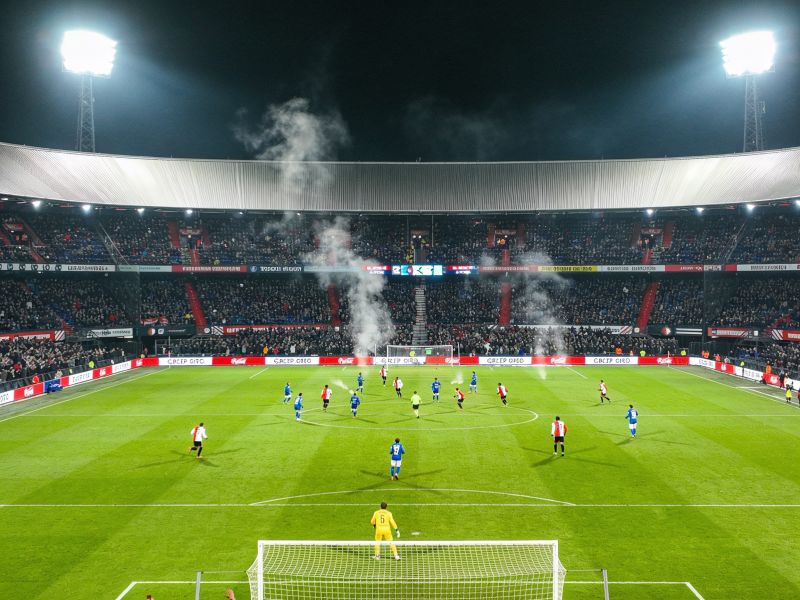
Braised World Cup: The Unexpected Culinary Legacy of Football's Greatest Stage
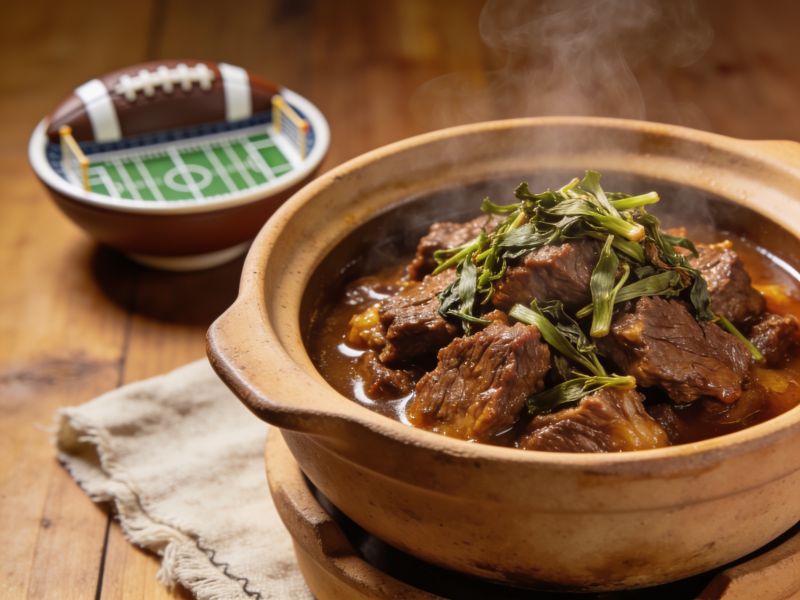
he 2018 World Cup in Russia left behind more than highlight reels and a French trophy lift. In a dimly lit kitchen outside Kazan, a local chef named Timur spent three weeks perfecting a dish he called braised World Cup—a beef shank slow-cooked in a broth of fermented mare's milk and wild garlic。served in a bowl shaped like a football stadium. His motivation was simple: feed the journalists who had eaten nothing but stale pirozhki for a month. The dish never appeared on a menu, but word spread through the press corps like a counterattack. By the semifinals, Timur was braising forty kilos of beef a day, and his tiny kitchen had become a pilgrimage site for photographers and broadcasters starving for something that wasn't fried.Four years later, in Qatar, the braised World Cup concept mutated. A Peruvian street vendor in Doha's Souq Waqif started ladling a version of his grandmother's seco de cordero into hollowed-out pita breads decorated with edible gold leaf—a nod to the trophy itself. He called it Mundial Estofado, and it sold out every night the Argentine fans marched past his stall. The connection to the tournament was purely atmospheric: the slow-cooked lamb, the smell of cumin and aji amarillo。the way the sauce stained your fingers exactly like the ink from a match ticket. Nobody was eating a World Cup. They were eating the mood of one.What makes braised World Cup a legitimate food category, rather than a gimmick, is the technique. Braising—searing meat, then simmering it low and slow in a covered pot with aromatic liquid—mirrors the rhythm of a tournament. The group stage is the sear: high heat, quick action, brutal elimination. The knockout rounds are the simmer: long, tense, transformative. By the final。the meat should fall apart at the touch of a spoon, just as a champion's defense collapses in the 113th minute. I've tasted perhaps a dozen interpretations across three World Cups, from a smoky feijoada-style version in São Paulo to a delicate duck braise in Moscow that cost more than my match ticket. The best ones shared one quality: patience. You cannot rush a braise, and you cannot rush a World Cup. Both demand that you surrender to time.The commercial afterlife of this dish is trickier. FIFA has trademarked the phrase in several jurisdictions, and a restaurant in Berlin received a cease-and-desist letter for putting "Braised World Cup" on its menu in 2022. The chef。a Brazilian named Renata, responded by renaming the dish "Slow-Cooked Football Tournament"—and then selling twice as many portions out of spite. That's the thing about food culture: it doesn't care about trademarks. The braise will outlast the branding. A pot of beef and onions doesn't know what year it is. It just knows heat, time, and the quiet satisfaction of a crowd that has finally stopped shouting and started eating.
Next time a World Cup rolls around, skip the overpriced stadium hot dog. Find the smallest kitchen you can, the one with a handwritten sign and a pot that's been on the stove since breakfast. Order whatever they call the slow-cooked meat. You'll taste the group stage, the extra time, the penalty shootout. You'll taste the whole ridiculous。magnificent tournament—braised down to its essence.
Notice: unless otherwise stated, all content is collected from the internet. If it infringes your rights, please contact us for removal.